This project explores my personal design philosophy through a typographic manifesto that declares my values, responsibilities, and beliefs about the role of graphic design.
Role:
Solo Graphic Designer

Context:
The manifesto project asked students to articulate a clear point of view on graphic design by creating a written and visual declaration of their beliefs. Manifestos have historically been used by artists, designers, and thinkers to challenge norms, provoke thought, and define movements. In this project, students were encouraged to take a stance, whether serious or playful, narrow or broad, on what graphic design is and what it should be. Alongside conceptual development, the project emphasized experimentation with risograph printing and the use of type, image, and space to create a dynamic, impactful artifact.
Design:
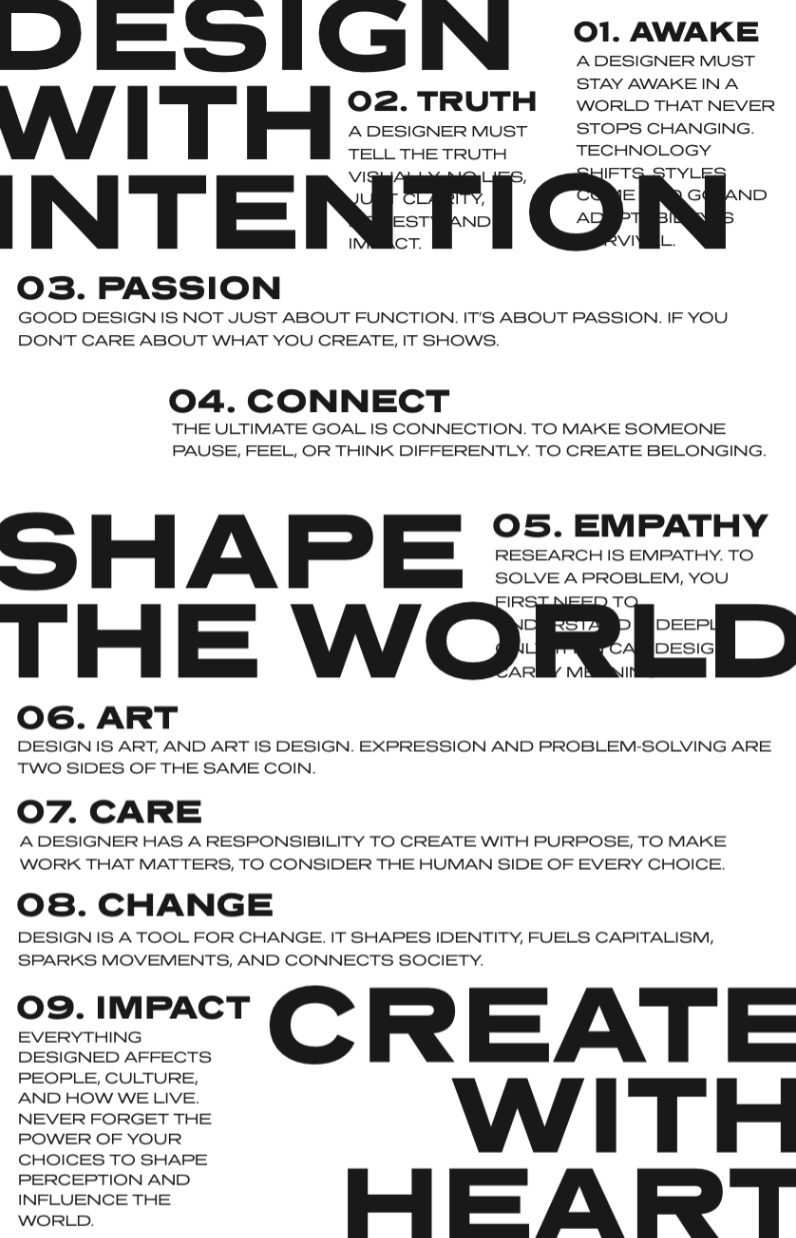
The visual design of the manifesto uses bold typography, layered composition, and intentional contrast to reflect the urgency and impact of the message. A limited pink and blue color palette was chosen to create tension and clarity, allowing the text to feel both striking and accessible. The piece was printed using risograph printing, embracing its imperfect textures, overlaps, and misregistration to reinforce the human element of design. These choices support the manifesto’s themes of honesty, adaptability, emotion, and intentionality, allowing the content and form to work together as one cohesive statement.

Manifesto:
1. A designer must stay awake in a world that never stops changing. Technology shifts, styles come and go, and adaptability is survival.
2. A designer must tell the truth visually, no lies, just clarity, honesty, and impact.
3. Good design is not just about function; it’s about passion. If you don’t care about what you create, it shows.
4. The ultimate goal is connection: to make someone pause, feel, or think differently, to create belonging.
5. Research is empathy. To solve a problem, you first need to understand it deeply. Only then can design carry meaning.
6. Design is art, and art is design. Expression and problem-solving are two sides of the same coin.
7. A designer has a responsibility to create with purpose, to make work that matters and to consider the human side of every choice.
8. Design is a tool for change. It shapes identity, fuels capitalism, sparks movements, and connects society.
9. Everything designed affects people, culture, and how we live. Never forget the power of your choices to shape perception and influence the world.
So design with intention, create with heart, and shape the world.
